B.C. health minister praises renewed partnership with Alberta
Published 1:05 pm Thursday, March 5, 2026
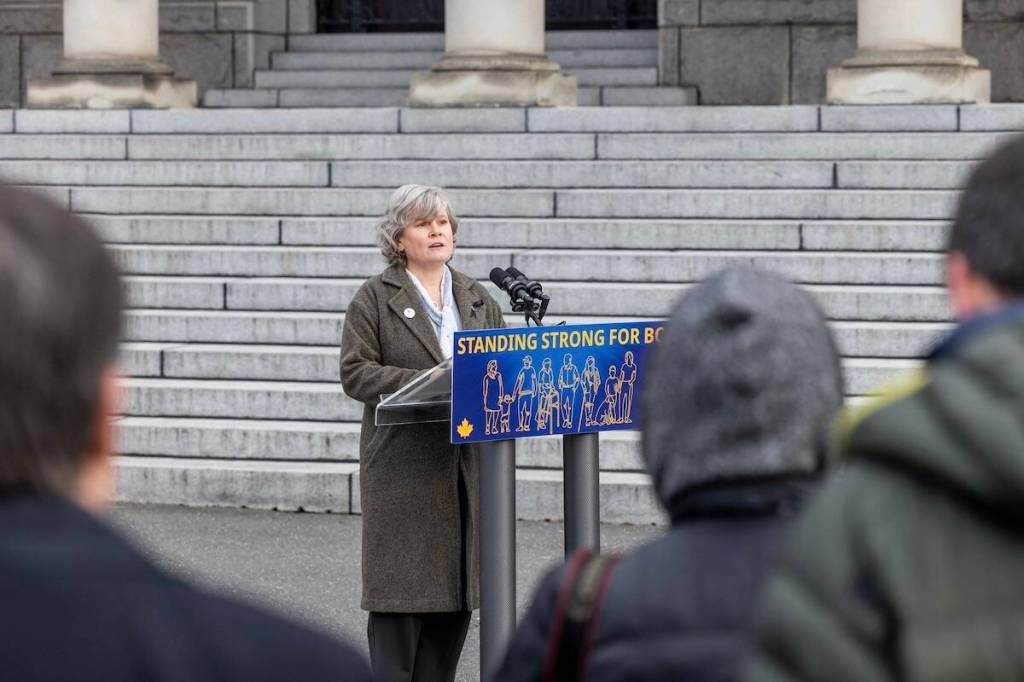
An internal Alberta government decision enabled B.C. based patients in border communities to regain access to scheduled surgery services in the province, according to B.C. Health Minister Josie Osborne.
On March 4, the B.C. government announced a renewed partnership with Alberta that will allow B.C. residents who live in places such as the East Kootenay to seek scheduled surgery services in the neighbouring province.
In 2021, during the COVID-19 pandemic, Alberta temporarily restricted access to elective surgeries from out-of-province patients in order to relieve the strain on their health care system.
Osborne said she had a lot of conversations with elected officials at all levels of government in the Southeast Kootenays, before connecting with Matt Jones, the Alberta Minster of Hospital and Surgical Health Services, last year to work on a solution.
“We had a discussion, we had a meeting, talked about this challenge and I asked him if they would reconsider their decision” said Osborne. “I was very glad to hear that they were willing to do that — they did reconsider their decision and did the work that they needed to do internally to lift that temporary restriction that they had put in place.”
In a press release, Jones celebrated the renewed agreement between the two provinces.
“Alberta is proud to renew this partnership with British Columbia to help ensure patients living near our shared border can access timely surgical care, closer to home,” said Jones. “By working together, Alberta and British Columbia are putting patients first by streamlining the patient journey and expanding surgical access.”
Osborne acknowledged the unique geography of the East Kootenay and that travelling east towards places like Calgary in Alberta is easier than going west to Kelowna or Vancouver.
“It just makes sense that when our systems are able to accommodate it, that we would of course take care of each other,” Osborne said.
While the Canada Health Act guarantees emergency health care to any Canadian citizen regardless of their insurance through their home province, non-emergent services are covered by reciprocity agreements between individual provincial health care systems.
Osborne noted her ministry did not have to provide additional resources to Alberta or do anything beyond simply requesting the reconsideration of the temporary restriction.
“In this case, it was literally a matter of asking them to reconsider that decision and talking about the benefits of a good working relationship,” said Osborne. “We know that Albertans receive care in British Columbia as well and again, it’s really good for us to return to this situation where you have this kind of reciprocity.”
The partnership between B.C. and Alberta covers scheduled surgeries. To get surgical care in Alberta, B.C.-based patients are asked to connect with their primary care provider in order to find an Alberta-based provider for consultation as part of the referral process requirements.
Accessing additional health care services in Alberta beyond scheduled surgeries — such as radiation therapy or diagnostic imaging — remains a further challenge.
“Our intention is to continue to monitor this, to keep this a conversation between our two provinces, work as collaboratively as possible with the Alberta Ministry of Health, making sure that people who live in the Southeast Kootenays — as well as Northeast B.C., I might add — have access to the kind of care that they need,” said Osborne.
Scott McInnis, MLA for Columbia River-Revelstoke has made health-care access for residents in the riding a top priority following his election in 2024.
He applauded this new step forward and gave credit to the work done behind the scenes by others, including his predecessor Doug Clovechok.
“There’s a lot of people behind the scenes that are no longer elected officials that really drove this forward and I’m proud to have continued that work to get this done with the Ministry of Health,” McInnis said.
“I think it’s important that we do celebrate this as a step forward, there are many people who will benefit and have benefited from surgical services in Alberta and it’s great that that’s returned. But having said that, there are more steps to come.”
McInnis said he will continue to work on improving East Kootenay residents’ access to further care, such as NICU or oncology services and that they deserve access to “an equitable health-care service platform that those who live in the Okanagan or the Lower Mainland have.”
“It’s a positive step forward,” he said. “I want to celebrate momentum when we have it, but certainly there’s more work to do to press this forward and to bring the other chapters of this story along, so that we can have unfettered access to Alberta for some of those other serious services that we need.”